Essential Tools Every Gravity Drilling Rig Needs
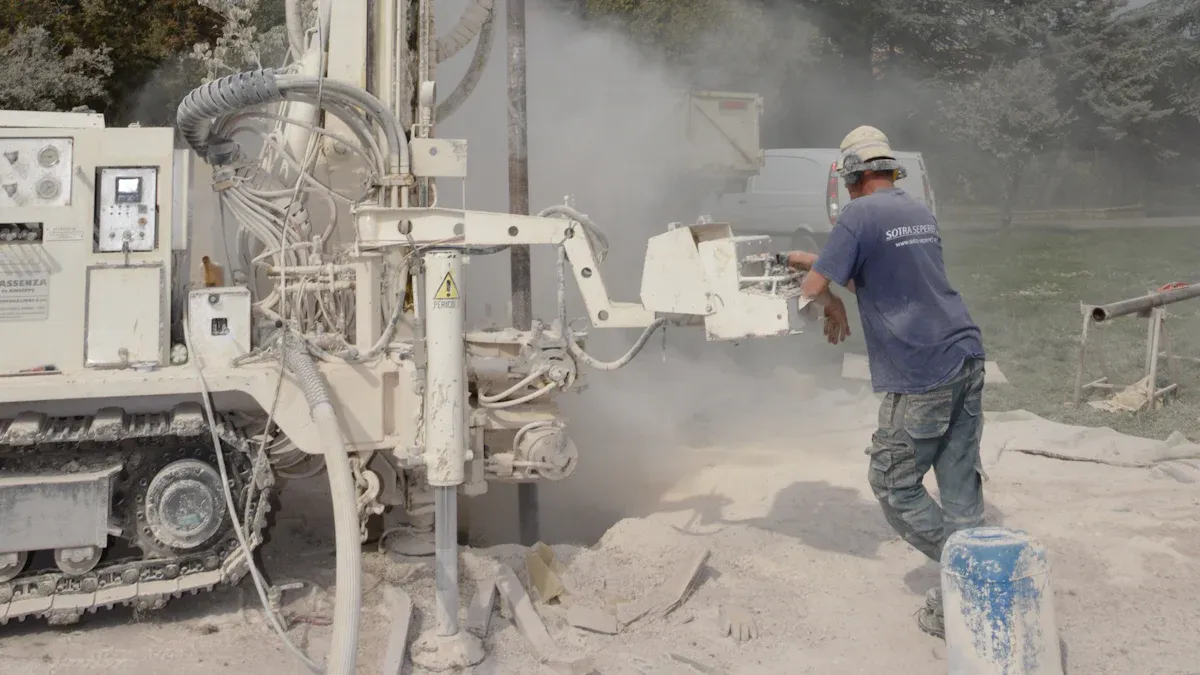
Operating a gravity drilling rig needs special tools to work well. These tools are drill rods, casings, hydraulic units, and borehole logging devices. Each tool helps keep the work safe, fast, and accurate. For example, the point of disconnect (POD) circle shows the farthest the riser system can move without breaking. Also, the red and yellow watch circles help crews act quickly at the right time. Using these tools on your rig lowers risks and makes drilling better.
Key Takeaways
- Spending on a solid base system makes drilling steady and faster.
- Picking proper drill rods and casings keeps holes stable and avoids damage.
- Checking hydraulic units and control panels often helps them work better and last longer.
- Adding safety tools like anchors and fall protection gear cuts down on accidents.
- Using tools like borehole loggers improves drilling accuracy and gives live data for safety.
Framework and Structural Components
Base and Support Systems
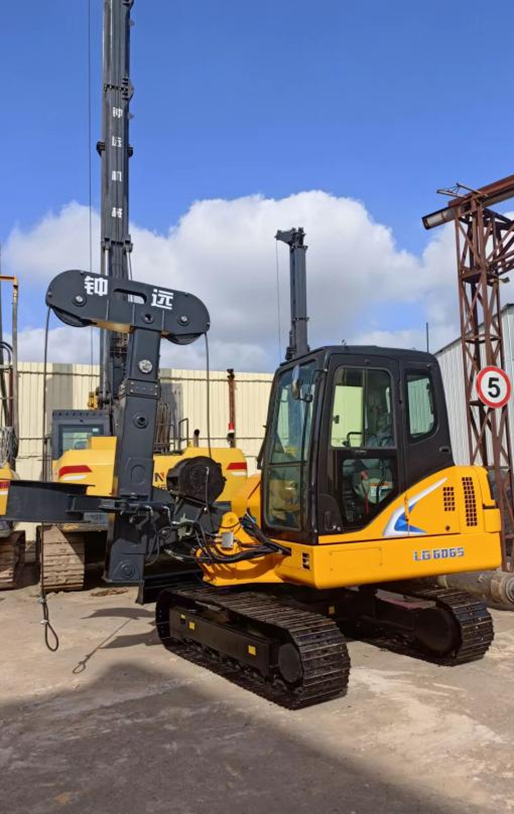
The base and support systems are the backbone of a drilling rig. They keep the rig steady, even in tough conditions. A strong base lowers vibrations and stops damage to the structure. This stability makes drilling safer and more effective.
Here’s how a good base system helps:
| Benefit Category | Description |
|---|---|
| Faster Drilling | Speeds up how quickly the drill moves through the ground. |
| Safer Operations | Reduces problems like stuck pipes or fluid leaks. |
| Smaller Crew | Needs fewer workers, saving money and improving safety. |
| Better Well Shape | Makes drilling smoother and easier to finish. |
Investing in solid base systems leads to safer and smoother drilling. It also cuts down on repairs, saving both time and money over time.
Drill Rods and Casings
Drill rods and casings are key for keeping the borehole stable. Drill rods link the drill bit to the rig, sending force to drill. Casings line the borehole to stop it from collapsing or getting dirty.
Pick drill rods that are strong and bendable. Good rods handle drilling stress without snapping. Casings should resist rust and be simple to set up. Using the right rods and casings keeps your rig safe and working well.
Drill Bits for Gravity Drilling
Drill bits cut into the earth during drilling. Choosing the right drill bit is important for good results. Different bits work best with certain types of soil or rock. Knowing your drilling area helps you pick the right one.
Drill bit performance can be checked using these measures:
| Performance Metric | Description |
|---|---|
| Energy Use | Shows how much energy is needed to break rock. |
| Force on Bit | Measures the pressure on the drill bit for better drilling. |
| Turning Power | Tracks how well the bit spins to cut through rock. |
| Drilling Speed | Checks how fast the bit moves through the ground. |
| Work Efficiency | Compares useful work done to energy used, showing overall success. |
Choosing the right drill bit boosts drilling speed and saves energy. It also helps your equipment last longer and work better.
Power and Control Systems
Hydraulic Units
Hydraulic units power your gravity drilling rig. They create energy to move the drill and parts smoothly. These systems use pressurized fluid to work efficiently.
A good hydraulic unit makes drilling better. It lowers the chance of equipment breaking and keeps power steady. Newer systems have features like variable flow control. This lets you change pressure based on drilling needs. It helps your equipment last longer and work more precisely.
To keep hydraulic units working well, do regular checks. Look at fluid levels, check hoses for leaks, and replace old parts quickly. These steps keep your rig safe and reliable, even in tough conditions.
Control Panels
Control panels are the brain of your drilling rig. They help you watch and change drilling settings easily. Modern panels use smart technology to make drilling safer and faster.
New control panels have many helpful features:
- Continuous fluid flow systems cut downtime and improve control.
- Dual motor drives let you adjust speed and force for tough jobs.
- Top drive systems give better control and reduce accident risks.
These tools make control panels very important for drilling. They help you manage speed, pressure, and force accurately. By using advanced control systems, you can drill safely, lower risks, and get better results.
Safety Tools for Gravity Drilling Rig Operations
Safety tools are very important for gravity drilling rigs. They keep workers safe, lower risks, and help work go smoothly. Below are three key safety tools to focus on.
Anchoring Systems
Anchoring systems keep the rig steady and stop it from moving. They hold the rig firmly to the ground, even in loose dirt or strong winds. Without good anchors, the rig might shift, causing accidents or damage.
Modern systems have adjustable clamps and hydraulic anchors. These features help the rig stay stable on different types of ground. Check your anchoring system often for damage or wear. A well-kept system keeps the rig safe and steady during drilling.
Fall Protection Gear
Fall protection gear is crucial for workers at high places. Harnesses, lanyards, and guardrails help prevent falls, which are a big danger on drilling sites.
Some companies now use machines to reduce work at heights. This makes jobs safer for workers. From 2005 to 2014, 63 workers died from falls in oil and gas drilling. About 30% of these deaths happened during rig setup or takedown. Using fall protection could have saved many lives.
| Incident Type | Description |
|---|---|
| Fatalities | Six deaths in UK offshore oil and gas in 10 years, two from falls. |
| Major Injuries | Falls caused 67 major injuries between 2012-2019. |
Make sure workers use fall protection gear the right way. This simple step can save lives and stop serious injuries.
Emergency Shutoff Mechanisms
Emergency shutoff systems are critical for unexpected problems. They let you stop work quickly to avoid accidents or damage.
Place shutoff controls where they are easy to reach. Teach workers how to use them properly. Practice drills to prepare for emergencies. A good shutoff system protects workers and reduces repair costs and delays.
Monitoring and Measurement Equipment
Monitoring tools are key to making drilling work well. These tools help track progress, keep things accurate, and collect important data. Below are the main tools you need for good monitoring.
Depth and Inclination Tools
Depth and angle tools measure how deep and at what tilt you drill. They make sure the borehole stays on the planned path. This is important for safety and smooth operations. Modern tools are very accurate and reliable, making them a must-have.
Here’s what they can measure:
| Measurement Type | Accuracy | Repeatability | Nominal Resolution | Unit |
|---|---|---|---|---|
| Inclination | 0.2 | 0.1 | 0.1 | ± degrees |
| Azimuth (> 2.0 Inclination, no magnetic interference) | 0.25 – 1.0 | 0.25 – 1.0 | 0.1 | ± degrees |
These tools help you stay in control and avoid mistakes. Regular checks keep them working properly and giving correct data.
Soil Sampling Kits
Soil sampling kits let you collect and study soil from the borehole. They show what the soil or rock layers are like. This helps you pick the right drill bits and adjust your plans.
A good soil kit usually has:
- Core barrels to take full samples.
- Bags to store samples safely.
- Tools to label and record details.
Studying soil samples helps you spot problems like hard rocks or weak layers early. This saves time and makes drilling more efficient.
Borehole Logging Devices
Borehole logging tools give detailed info about the ground around the borehole. They use advanced tech to collect and analyze data in real time. This helps you make better choices while drilling.
New features in borehole logging include:
- Real-time data collection for faster decisions.
- High-quality imaging for clearer results.
- Tools that give deeper insights into underground layers.
- Big data and machine learning for spotting patterns and predicting issues.
- Smart systems that improve processes and cut delays.
These tools make drilling more accurate and safer. Studies show they can lower safety risks by over 20%:
| Metric | Description |
|---|---|
| Drilling Accuracy Rate | Shows how precise drilling is, thanks to monitoring tools. |
| Equipment Utilization Rate | Measures how well tools are used, boosted by real-time data. |
| Safety Incident Frequency | Tracks fewer safety problems, proving monitoring reduces risks by over 20%. |
Using top-notch borehole logging tools keeps your rig safe and running smoothly.
Maintenance and Support Equipment
Cleaning and Lubrication Tools
Keeping your drilling rig clean and oiled helps it work better. Good cleaning and lubrication tools are important for smooth operations. They also help your equipment last longer.
Why these tools are useful:
- Checking oil often shows if parts need cleaning.
- Watching oil use helps you know when to add more.
- Oil cools parts and removes dirt better than grease.
Using good lubrication tools stops parts from wearing out quickly. Clean machines work faster and save money. Make sure to oil and clean your rig regularly to avoid problems.
Spare Parts Kits
Spare parts kits are important for fixing your rig fast. Having extra parts ready keeps your rig working without long breaks. Studies show that managing spare parts well stops equipment failures.
What a good kit should have:
- Extra drill bits and rods.
- Spare hydraulic hoses and seals.
- Backup electrical parts for control panels.
Taking care of your rig and having spare parts ready keeps it running. Managing your inventory well makes your equipment last longer. Forgetting to plan for spare parts can cause delays, so always check your kit.
Storage Solutions
Organized storage keeps tools safe and easy to find. Good storage stops damage from things like water and dust. It also saves time during drilling by making tools easy to grab.
Best storage ideas:
- Waterproof boxes for rigs outside.
- Shelves for small tools and parts.
- Labels to track where items are stored.
Keeping tools stored well protects them and reduces waste. Strong storage solutions make sure your tools are ready when needed.
The tools mentioned here are key for safe and smooth drilling. Every tool, like drill bits and monitors, helps improve accuracy and cut risks. Good-quality tools last longer and reduce work delays.
Cutting drilling costs needs a step-by-step DMAIC (Define-Measure-Analyze-Improve-Control) process. But studies show drilling data is often not good enough for proper analysis.
Check your tools and think about upgrading them. Using dependable tools makes drilling safer, faster, and keeps your rig working well.
FAQ
What is the most important tool for a gravity drilling rig?
All tools are useful, but the base system matters most. It keeps the rig steady and safe while drilling. Without it, vibrations or damage can happen, causing problems and delays.
How often should you maintain drilling equipment?
You should check your equipment often. Look at hydraulic units, drill rods, and safety tools before each job. Regular care stops breakdowns, makes tools last longer, and keeps drilling smooth.
Why is soil sampling important in gravity drilling?
Soil sampling shows what the ground is like. It helps find soil types, rock layers, and challenges. This info lets you pick the best drill bits and plan better.
How do borehole logging devices improve safety?
Borehole logging tools give live updates about underground conditions. They help track drilling accuracy and spot dangers early. This lowers risks and makes drilling safer.
What should you include in a spare parts kit?
A spare parts kit needs extra drill bits, rods, hoses, and wires. Having these ready saves time and helps fix problems fast when tools break.